This is default featured slide 1 title

Go to Blogger edit html and find these sentences.Now replace these sentences with your own descriptions.This theme is Bloggerized by Lasantha Bandara - Premiumbloggertemplates.com.

This is default featured slide 2 title

Go to Blogger edit html and find these sentences.Now replace these sentences with your own descriptions.This theme is Bloggerized by Lasantha Bandara - Premiumbloggertemplates.com.

This is default featured slide 3 title

Go to Blogger edit html and find these sentences.Now replace these sentences with your own descriptions.This theme is Bloggerized by Lasantha Bandara - Premiumbloggertemplates.com.

This is default featured slide 4 title

Go to Blogger edit html and find these sentences.Now replace these sentences with your own descriptions.This theme is Bloggerized by Lasantha Bandara - Premiumbloggertemplates.com.

This is default featured slide 5 title

Go to Blogger edit html and find these sentences.Now replace these sentences with your own descriptions.This theme is Bloggerized by Lasantha Bandara - Premiumbloggertemplates.com.

Wednesday, November 14, 2018

ICC opens Myanmar Rohingya crimes probe

The International Criminal Court has opened a preliminary examination into Myanmar's alleged crimes against its Rohingya Muslim minority.
The move could pave the way to a full investigation into Myanmar's military crackdown that has seen thousands killed and over 700,000 displaced.
Last month Myanmar rejected a UN report calling for Burmese military figures to be investigated for genocide.
However, that military report was criticised by human rights groups as an attempted "whitewash".
The military launched a crackdown in Myanmar's Rakhine state last year after Rohingya militants carried out deadly attacks on police posts. Hundreds of thousands have since fled to neighbouring Bangladesh.
There have been widespread allegations of human rights abuses, including arbitrary killing, rape and burning of land over many years.
Ms Bensouda said the initial probe, which could lead to a formal investigation by the ICC, could focus on a number of alleged "coercive acts" that possibly led to the "forced displacement" of Rohingya Muslims.
She said that these might include "deprivation of fundamental rights, killing, sexual violence, enforced disappearance, destruction and looting".
She added that the Hague-based court would also consider whether persecution or "other inhumane acts" played a part in the plight of the Rohingya.
While Myanmar has not signed up to the ICC, judges have ruled that the court still has jurisdiction over any alleged crimes against the Rohingya, because Bangladesh is an ICC member.
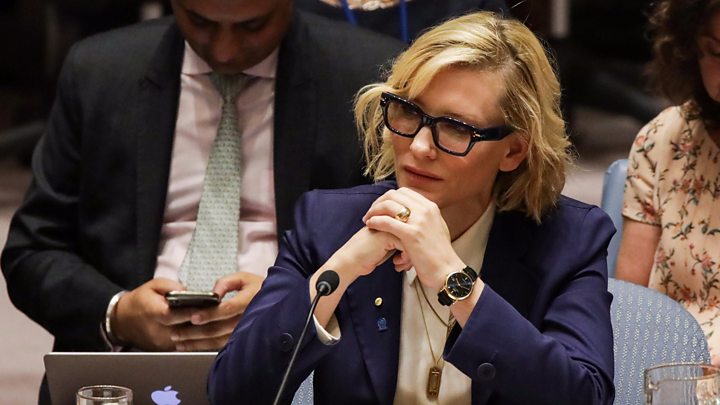
Media captionCate Blanchett on the Rohingya crisis
The ICC announcement comes as UK Foreign Secretary Jeremy Hunt, who is set to arrive in Myanmar on Wednesday for talks with Burmese leaders, promised additional support for victims of sexual violence.
Mr Hunt, who will also visit the northern Rakhine state from where thousands of Rohingya fled to escape the military, will also meet Myanmar's de facto leader and Nobel Peace Prize laureate Aung San Suu Kyi, who recently said her government could in hindsight have handled the Rohingya situation differently.
Earlier on Tuesday, UN investigators presented a 444-page report detailing alleged violations committed by the Burmese military in relation to violence against the Rohingya Muslim population.
"It is hard to fathom the level of brutality," the head of the UN's fact-finding mission on Myanmar, Marzuki Darusman, told the UN Human Rights Council, adding that the military had showed a "total disregard for civilian life".
The report was criticised by Myanmar's ambassador to the UN, Kyaw Moe Tun, who labelled it "one-sided" and "flawed".
The government says Rohingya Muslims are illegal immigrants who present a threat to the country's security and Buddhist identity.
As a result the Rohingya have faced decades of discrimination in Myanmar and are denied citizenship.
Share:

Tuesday, November 13, 2018

Web Security and Privacy

Share:

Myanmar police investigate home-grown porn film

Myanmar police said Wednesday they have launched a criminal investigation into what producers describe as the first high-definition pornographic  movie ever filmed in the socially conservative country.
Social media exploded this week when a trailer for the two-hour erotic movie, entitled "The Violet of Myanmar", was posted on Facebook by the production company Art of Myanmar.
On Monday the firm said it was proud to have "launched Burma's first ever HD" pornographic film and promised to bring more hardcore action soon.
They later said their Viber account crashed after it received more than 2,000 messages in 24 hours from eager customers.
But the firm's Facebook page was taken down two days later and police said Wednesday they had opened an investigation into the production company.
"Myanmar police are now in the process of investigating to take action, especially the crime department," the head of the force's Communication and Technology Department, Colonel Tun Nay Win, told AFP.
He added that "the case is concerned with technology" but declined to give further details on what laws the company may have violated.
Owning "obscene" material is illegal in Buddhist-majority Myanmar, where many people are deeply religious and even talking about sex is often considered taboo.
The actress in "The Violet of Myanmar" wears a surgical mask and has her face blurred throughout the film.
Art of Myanmar said it had had cost them 400,000 kyat ($300) to make the film, which was inspired by the protagonist's bright purple traditional skirt.
Internet access has expanded hugely since the military junta that ran the country for 50 years handed over power in 2011.
Share:

A Genocide Incited on Facebook, With Posts From Myanmar’s Military

NAYPYIDAW, Myanmar — They posed as fans of pop stars and national heroes as they flooded Facebook with their hatred. One said Islam was a global threat to Buddhism. Another shared a false story about the rape of a Buddhist woman by a Muslim man.
The Facebook posts were not from everyday internet users. Instead, they were from Myanmar military personnel who turned the social network into a tool for ethnic cleansing, according to former military officials, researchers and civilian officials in the country.
Members of the Myanmar military were the prime operatives behind a systematic campaign on Facebook that stretched back half a decade and that targeted the country’s mostly Muslim Rohingya minority group, the people said. The military exploited Facebook’s wide reach in Myanmar, where it is so broadly used that many of the country’s 18 million internet users confuse the Silicon Valley social media platform with the internet. Human rights groups blame the anti-Rohingya propaganda for inciting murdersrapes and the largest forced human migration in recent history.
While Facebook took down the official accounts of senior Myanmar military leaders in August, the breadth and details of the propaganda campaign — which was hidden behind fake names and sham accounts — went undetected. The campaign, described by five people who asked for anonymity because they feared for their safety, included hundreds of military personnel who created troll accounts and news and celebrity pages on Facebook and then flooded them with incendiary comments and posts timed for peak viewership.
Share:

Myanmar Buddhist temple now a nirvana for snakes

YANGON: Crossing a bridge to the middle of a lake in Myanmar's Yangon region, pilgrims arrive at a temple to pin their hopes on the pythons slinking across the temple's floors and draped across windows.
"People come here because they believe that their prayers will be fulfilled when they ask for something," said Sandar Thiri, a nun residing at the Baungdawgyoke pagoda - dubbed the "snake temple" by locals.
"The rule is that people can only ask for one thing, not many things," she said. "Don't be greedy."
In the main room of the temple is a tree with figurines of Buddha around it. The serpents move slowly through the branches, their forked tongues darting in and out as they gaze down on the worshippers prostrating themselves.
Devotees cross the bridge to the temple, which sits in the middle of a lake, believing the snakes
Devotees cross the bridge to the temple, which sits in the middle of a lake, believing the snakes there will ensure their prayers are answered. (Photo: AFP/Ye Aung Thu)

Many locals regard the presence of the dozens of pythons, some measuring up to two or three metres in length, as a sign of the pagoda's power.
Win Myint, 45, said he has been coming to Baungdawgyoke since he was a child.
"Now I am older and I come to give offerings, which has made some of my wishes come true."
Nearby, a monk dozes on a chair with two serpents curled at his feet, their thick bodies holding 1,000 kyat notes (worth about US$0.60) tucked in between their coils by hopeful visitors. A woman, brave enough to venture close to a python, gently caresses it.
The mythical "naga" - a Sanskrit word for snake - is a common figure seen in temples throughout Southeast Asia, where Buddhist, Hindu and animist influences are intertwined. Nagas are usually carved out of stone and placed at the entrances.
But seeing a live snake slithering among Buddha statues is rare, and for some visitors, that serves as a draw to visit Baungdawgyoke - a short drive southwest of downtown Yangon.
Many locals regard the presence of the dozens of pythons, some measuring up to two or three metres
Many locals regard the presence of the dozens of pythons, some measuring up to two or three metres in length, as a sign of the pagoda's power. (Photo: AFP/Ye Aung Thu)

With snakes curled up next to meditating monks, the image is reminiscent of a story in Buddhist mythology when the Buddha sat under a tree to meditate.
According to the legend, as it started to rain, a cobra protected Buddha by fanning its hood wide over his head to act as a shelter.
Nay Myo Thu, a 30-year-old farmer, believes he will receive good fortune by bringing the snakes he finds in his fields to the temple instead of killing them, adhering to a Buddhist belief that all animals are sentient beings that can be reincarnated as humans.
"I don't want to bring about any misfortune by killing a creature," Nay Myo Thu said. "Catching and donating the snakes brings me good fortune instead."

Share:

Reuters reporters in Myanmar appeal against conviction in state secrets case


YANGON: Lawyers for two Reuters reporters jailed for seven years in Myanmar lodged an appeal on Monday against their conviction on charges of breaking the country's Official Secrets Act.
The appeal cited evidence of a police set-up and lack of proof of a crime.
"We filed an appeal ... because the trial court's ruling was wrong," said Reuters President and Editor-in-Chief, Stephen J. Adler in a statement. "In condemning them as spies, it ignored compelling evidence of a police set-up, serious due process violations, and the prosecution's failure to prove any of the key elements of the crime."
He added the court shifted the burden of proof from the prosecution to the Reuters reporters, Wa Lone and Kyaw Soe Oo, and called on Myanmar to "uphold its stated dedication to rule of law, freedom of the press, and democracy by ordering the release of our colleagues."
Wa Lone, 32, and Kyaw Soe Oo, 28, were found guilty in September after a trial at a Yangon district court in a landmark case that has raised questions about Myanmar's progress towards democracy and sparked an outcry from diplomats and human rights advocates.
Myanmar leader Aung San Suu Kyi said in September that the jailing of the reporters had nothing to do with freedom of expression. In comments made the week after their conviction, she said they had been sentenced for handling official secrets and "were not jailed because they were journalists".
Government spokesman Zaw Htay declined comment on the appeal.
Defence lawyers filed the appeal on Monday morning at the Yangon-based High Court. If the court rules to allow the appeal, an appellate judge would take written and oral arguments from prosecution and defence lawyers before handing down a decision.
Before their arrest, the reporters had been working on a Reuters investigation into the killing of 10 Rohingya Muslim men and boys by security forces and local Buddhists in western Myanmar's Rakhine state during an army crackdown that began in August last year. The operation sent more than 700,000 people fleeing to Bangladesh.
During eight months of hearings, Wa Lone and Kyaw Soe Oo testified that two policemen they had not met before handed them papers rolled up in a newspaper during a meeting at a Yangon restaurant on Dec. 12. Almost immediately afterwards, they said, they were bundled into a car by plainclothes officers.
On Feb. 1, a police witness said under cross-examination that information in the documents had already been published in newspapers. In April, a prosecution witness testified that a senior officer had ordered subordinates to plant documents on Wa Lone to "trap" the reporter.
(Reporting by Antoni Slodkowski; Editing by Alex Richardson and Raju Gopalakrishnan)

Read more at https://www.channelnewsasia.com/news/asia/reuters-reporters-in-myanmar-appeal-against-conviction-in-state-secrets-case-10898596
Share:

'We don't need their prize': Myanmar defiant as Amnesty pulls Aung San Suu Kyi award


YANGON: Myanmar authorities and citizens leapt to the defence of Aung San Suu Kyi Tuesday (Nov 13) after Amnesty International stripped her of its top award over indifference to atrocities committed against Rohingya Muslims, doubling down on support for the civilian leader in the face of global ire.
Aung San Suu Kyi's international reputation as a rights icon is in pieces and Amnesty's move is the latest in a string of rescinded accolades.
Canada revoked her honorary citizenship last month and the US Holocaust Museum in March took back an award named after concentration camp survivor Elie Wiesel.
Institutions that once showered Aung San Suu Kyi with titles are rapidly distancing themselves from a leader they argue is doing little in the face of alleged genocide and ethnic cleansing against its Rohingya minority.
Amnesty's Ambassador of Conscience Award was bestowed in 2009 and other recipients include Nelson Mandela, Malala Yousafzai and Ai Wei Wei.
"Today, we are profoundly dismayed that you no longer represent a symbol of hope, courage, and the undying defence of human rights," Amnesty International chief Kumi Naidoo said in a letter to Aung San Suu Kyi released by the group.
"Amnesty International cannot justify your continued status as a recipient of the Ambassador of Conscience award and so with great sadness we are hereby withdrawing it from you."
But domestically, Aung San Suu Kyi remains popular across vast swathes of Myanmar and within her party, the National League for Democracy, which won elections in 2015 ending decades of military-backed rule.
The stripping of awards not only harms the "dignity" of Aung San Suu Kyi, but also that of all NLD members, the party's spokesman Myo Nyunt told AFP, adding he thought this was all part of a wider conspiracy.
"All these organisations are working for the Bengalis who have left the country in order to get citizenship," he said, using a pejorative term for the Rohingya that is widely accepted in Myanmar and falsely implies they are illegal immigrants from Bangladesh.
Deputy Minister for Information Aung Hla Tun told AFP he was personally sad and disappointed by Amnesty's announcement and said Aung San Suu Kyi was being treated "unfairly".
Such moves would only "make the people love her more", he added.
People on the street in Yangon were defiant.
"Their withdrawal is pretty childish. It's like when children aren't getting along with each other and take back their toys," 50-year-old Khin Maung Aye said.
"We don't need their prize," said Htay Htay, 60.
More than 720,000 Rohingya were driven over the border to Bangladesh in a crackdown that started in August 2017, and refugees have detailed horrific testimony of murder, rape, torture and arson.
The military says it was defending itself against Rohingya militants.
UN investigators have called for top generals to be prosecuted for genocide and accused Aung San Suu Kyi's government of complicity, though has stopped short of calling for her to be hauled before a court.
Aung San Suu Kyi became a democracy icon after spearheading the opposition movement to the feared military junta, which resulted in her spending some 15 years under house arrest before her release in 2010.
She has yet to comment on Amnesty's decision herself but has in the past shrugged off questions about withdrawn awards.
Calls to revoke Aung San Suu Kyi's 1991 Nobel Peace Prize have been rebuffed by the committee that oversees it.
Some think, however, that Amnesty's move will be taken more personally because she became a cause celebre for the rights group during her house arrest.
"This is effectively an excommunication of Aung San Suu Kyi from the pantheon of human rights champions," Yangon-based independent analyst David Mathieson said, adding that the decision would "sting".

Read more at https://www.channelnewsasia.com/news/asia/we-don-t-need-their-prize-myanmar-defiant-as-amnesty-pulls-aung-10926298
Share:

AFC Olympic Qualifiers: Indian women ready for Myanmar challenge

Yangon [Myanmar], Nov 12 (ANI): The Indian women's football team will lock horns against hosts Myanmar in their third and final match of the 2020 AFC Women's Olympic Qualifiers first round here at the Thuwunna Stadium on Tuesday. India played out a 1-1 draw in their opener against Nepal, however, made a stunning comeback in a resounding 7-1 victory over Bangladesh in their second game with Bala Devi getting on the scoresheet four and Kamala Devi scoring two goals. Reflecting on the clash against Bangladesh, India's coach Maymol Rocky said that all the credit goes to the girls, who were excellent against Bangladesh. "7-1 is a good margin of victory. We wanted to win against Nepal but couldn't, so it was important that we won against Bangladesh. The girls were excellent on the day and all the credit for the win goes to them. I hope people and fans across India will appreciate the result," Rocky said. India have gained four points from their two matches, the same as Myanmar, who won their first match by a 5-0 margin against Bangladesh and followed it up with a surprising 1-1 stalemate against Nepal earlier on Sunday. With the FIFA world ranking of 44, the hosts are the highest-ranked side in the group, however, they could only manage a point against 108-ranked Nepal, which has made the final match day an enticing prospect with all four teams still in the running for a spot in the second round. Talking about the upcoming encounter, coach Rocky said that her team would be aiming for nothing less than three points. "We need to remain focused on the task at hand. A draw or a win will help us in the qualification race but we are thinking only about the win. The girls are motivated and I am sure they will go all out and give their 100 per cent against Myanmar," she said. "If the stadium has even one Indian flag, it will definitely cheer up the girls. Myanmar, being the hosts, will have a lot of fans coming in to support them and I urge the Indians in Myanmar to come out and cheer for us. For the fans back home, I request everyone to continue giving their support and ask you to keep us in your prayers," Rocky added.(ANI)
Share:

Blog Archive

Definition List

Unordered List

Support